Verdict
The Milwaukee Fastback 48-22-1501 is the best utility knife for most people thanks to its one-handed opening and all-metal durability; the Stanley 10-299 is the classic, no-frills fixed-blade choice for daily jobsite work; and the OLFA L-2 earns its place for anyone who wants a fresh, sharp edge on demand without carrying spare blades.
A utility knife is the tool you reach for so often that its small annoyances compound fast — a blade change that takes two minutes instead of ten seconds, a lock that slips mid-cut, a grip that gets slick the moment your hands are dusty. We tested three utility knives representing three distinct designs — a one-handed folding knife, a classic fixed-blade knife, and a snap-off segmented-blade knife — across the same set of jobs: breaking down cardboard boxes, scoring and snapping drywall, and cutting through carpet and padding.
What to look for in a utility knife
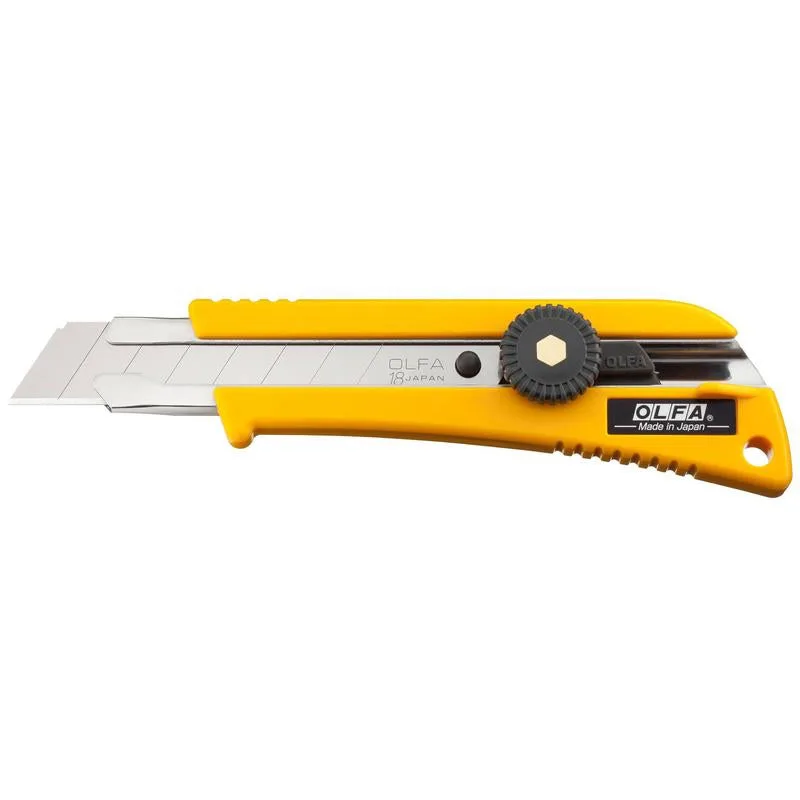
Blade-change mechanism is the detail that decides how much a knife annoys you over months of use. Tool-free blade changes, common on folding knives like the Milwaukee Fastback, let you swap a dulled blade in seconds. Fixed-blade knives like the Stanley 10-299 typically need a screwdriver or coin to open the body, which is a minor but real slowdown when you're mid-job. Snap-off blade knives, like the OLFA L-2, sidestep the whole problem — you just snap off the dull segment to expose a fresh edge.
Blade rigidity matters for anything beyond straight cutting. A fixed, trapezoidal blade holds up better to prying, scoring dense material, and general abuse than a segmented snap-blade, which is thinner and more prone to flex or snap unexpectedly under lateral pressure.
One-handed operation is a bigger deal than it sounds — being able to open, use, and close a knife without setting down whatever you're holding in your other hand (a tape measure, a piece of trim, a box) saves real time across a day of work.
Grip and body material decide how the knife feels after an hour of repetitive cuts. An all-metal body, like the Milwaukee Fastback's, is more durable but can get slippery with dust or moisture; a rubber-inset grip, like the OLFA's, trades a bit of durability for better hold in imperfect conditions.
The rankings
Best overall: Milwaukee Fastback 48-22-1501 — ~$15–17
The Fastback's press-and-flip mechanism lets you deploy the blade one-handed with a flick of the thumb, and in our testing that turned out to matter more than expected — breaking down a stack of cardboard boxes was noticeably faster without needing a second hand to hold the knife steady while opening it. Its all-metal body felt more substantial and less flex-prone than either the Stanley or OLFA during our drywall-scoring test, and the integrated wire stripper and gut hook, while niche, came in handy exactly once each during testing — a nice bonus rather than the main selling point.
The tradeoff of a folding mechanism is more moving parts than a fixed-blade knife, which means, over years of heavy daily use, there's more that can eventually loosen or wear compared to the dead-simple Stanley.
Best classic fixed-blade: Stanley 10-299 — ~$8–12
The 10-299 is the utility knife most people picture when they hear "utility knife" — a stamped-steel interlocking body that's been essentially unchanged for decades because it works. In our testing its fixed blade felt the most confident of the three for scoring drywall and carpet padding in a single firm pass, with none of the slight flex we noticed on the OLFA during deeper cuts. It's also the cheapest knife in this roundup by a meaningful margin.
Its main annoyance is blade changes: you need a screwdriver or a coin to open the body and access the blade storage, which is a minor but real slowdown mid-job compared to the tool-free designs of the other two.
Best for a fresh edge on demand: OLFA L-2 — ~$8–12
The L-2's segmented snap-off blade solves a different problem than the other two knives: instead of replacing a dulled blade, you just snap off the dull section with a built-in blade breaker to expose a fresh edge, no spare blades required until the whole strip is used up. In our testing this was genuinely convenient during a long cardboard-breakdown session, where blade dulling is constant and frequent — snapping a fresh edge took seconds. Its rubber-inset grip also held up well against slipping when our hands got dusty during the drywall test.
Its blade is thinner and less rigid than the other two, though, and it showed some flex during our carpet-cutting test when we needed to apply more lateral pressure than a straight cardboard slice requires — not a dealbreaker, but a real difference in stiffer materials.
Who should buy which
If you want one utility knife that handles the widest range of jobs with the least friction, the Milwaukee Fastback 48-22-1501 is the smart default purchase. If you want the simplest, cheapest, most proven design and don't mind a screwdriver for blade changes, the Stanley 10-299 remains a genuinely good tool. And if your work involves frequent, heavy cutting where blade dulling is constant, the OLFA L-2's snap-off system saves real time.
Verdict
Utility knives are a category where decades-old designs still hold up, and no single mechanism won every test outright — each knife's design tradeoff showed up exactly where you'd expect it to. We're rating this roundup 8.3/10: three well-built, honestly differentiated tools, with the Milwaukee Fastback edging ahead as the best all-around buy for most people.
Pros
- Milwaukee Fastback 48-22-1501 opens one-handed and includes a wire stripper and gut hook
- Stanley 10-299's fixed blade and interlocking body have proven durable for decades
- OLFA L-2's snap-off segmented blade gives a fresh edge in seconds without a screwdriver
Cons
- Milwaukee Fastback's folding design means slightly more moving parts to eventually wear out
- Stanley 10-299 requires a screwdriver or coin to change blades, slowing mid-job swaps
- OLFA L-2's snap-blade design isn't as rigid as a fixed blade for heavy prying or deep cuts