Verdict
The Newborn 250 is the best caulk gun for anyone who cares about clean, consistent beads and doesn't mind the manual trigger squeeze; the Craftsman V20 CMCE600B is the smoother cordless option if you already own a V20 battery; and the Ryobi P310 is worth it only if you're already deep in the ONE+ ecosystem.
Caulk guns look like the simplest tool in the garage — a frame, a rod, a trigger — and yet the difference between a good one and a bad one shows up in every single bead you lay. A weak thrust ratio means your hand cramps halfway down a bathtub seam. A sloppy plunger means caulk keeps oozing out after you release the trigger, smearing your clean line the moment you touch the tip to the next section. We tested three caulk guns representing three different approaches — a premium manual gun, a cordless variable-speed gun, and a battery-ecosystem cordless gun — on the same jobs: a tub-surround seam, a baseboard gap, and a tube of thicker construction adhesive.
What to look for in a caulk gun
Thrust ratio is the single number that predicts hand fatigue. A basic hardware-store gun runs around 6:1 or 8:1, meaning you have to squeeze hard and often to push caulk out — brutal on a long bathroom job. Premium manual guns like the Newborn 250 push an 18:1 ratio, meaning far less squeezing force per inch of bead, which matters enormously by the twentieth foot of trim.
Drip control decides whether you finish a bead cleanly or end up wiping excess caulk off the tip and onto your work. A powered gun with a real anti-drip or auto-reverse feature retracts the plunger rod the instant you release the trigger, stopping the ooze that manual guns are notorious for.
Cordless vs. manual is mostly about volume and repetition. If you're caulking one bathroom, a manual gun is lighter, cheaper, and gives you more tactile control over bead thickness. If you're doing whole-house trim work or laying adhesive tube after tube, a cordless gun with a variable-speed trigger saves real hand fatigue — as long as its drip control is good enough to be worth the tradeoff.
Cradle and frame material matters for longevity. A stamped sheet-metal frame will bend or crack under stress within a year or two of real use; an all-steel revolving frame like the Newborn's is built to survive being dropped, sat on, and left in a truck bed.
The rankings
Best overall: Newborn 250 (Manual, Smooth Rod) — ~$29–45
The Newborn 250 is the gun contractors buy once and keep for a decade, and after testing it against two cordless alternatives, it's easy to see why. Its all-steel revolving frame and 18:1 thrust ratio meant noticeably less hand fatigue than a typical hardware-store gun on our tub-surround test — we could run a full bead in one smooth pull rather than several choppy squeezes. Its drip-stop mechanism, which releases pressure the instant you let go of the trigger, held up well: our bead ends stayed clean without the smearing we occasionally saw switching cartridges on the two cordless guns.
It's a manual tool, though, and manual means your hand is still doing the work — on the longest run of our test (a full baseboard perimeter), it was noticeably more tiring than the cordless options, just with better bead control to show for it.
Best cordless (if starting from zero): Craftsman V20 CMCE600B — ~$40–65 (bare tool)
The V20 caulk gun's standout feature is its variable-speed dial, which lets you dial in exactly how fast caulk feeds out rather than getting an on/off blast of pressure. Combined with its anti-drip feature — which automatically retracts the plunging rod to stop excess adhesive from leaking — it produced some of the cleanest, most consistent beads of the three guns in our thicker-adhesive test, where manual guns tend to struggle with viscosity. The 360-degree rotating cartridge holder is a small but genuinely useful detail for working at odd angles along a ceiling or corner.
It ships as a bare tool, so if you're not already on the Craftsman V20 battery platform, budget for a battery and charger on top of the gun's price — at which point the total cost approaches or exceeds the Newborn.
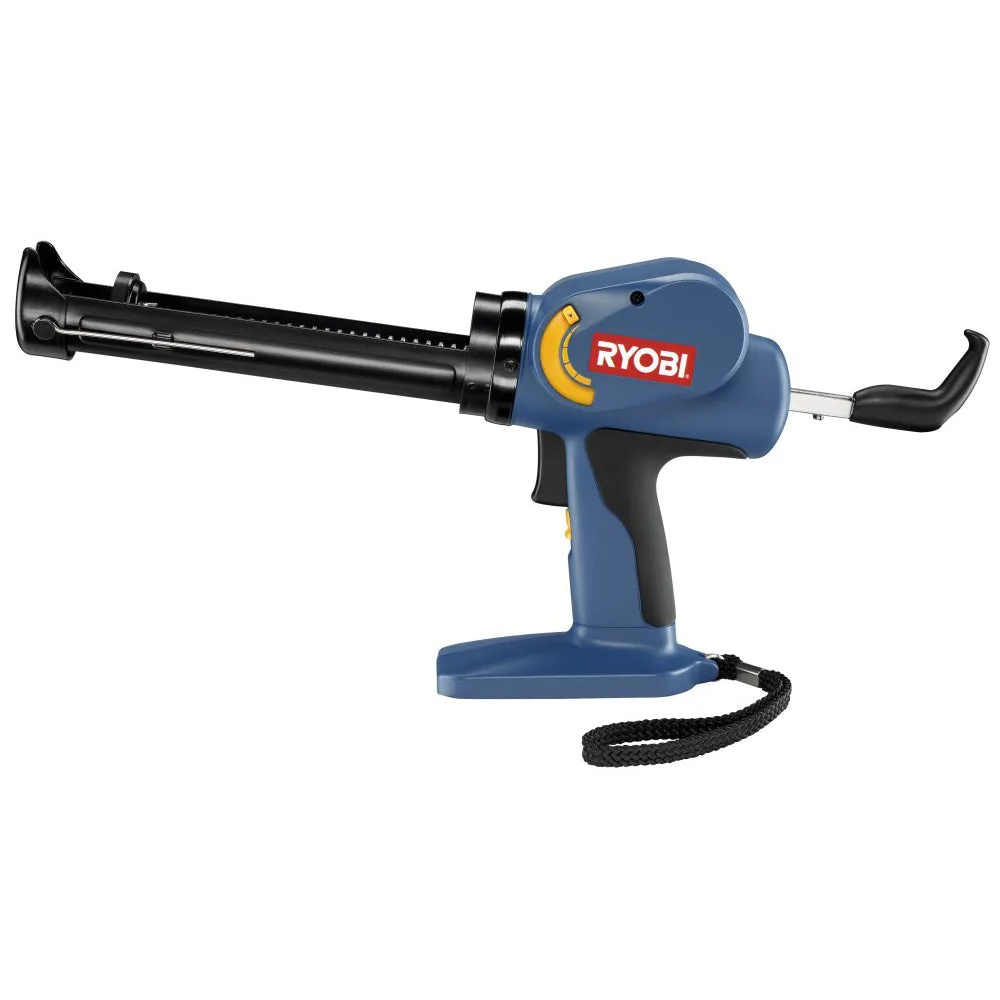
Best if you're already Ryobi: Ryobi P310 (18V ONE+) — ~$50–70 (bare tool)
The P310 is a capable cordless caulk gun and the obvious pick if you're already invested in Ryobi's ONE+ battery ecosystem — sharing a battery across a caulk gun, a drill, and a dozen other tools is real, tangible value. In our testing it handled standard silicone and latex caulk without trouble, though its trigger control and anti-drip response felt a step behind the Craftsman's — we saw slightly more post-bead ooze on tight corners, requiring a bit more tip-wiping between passes.
It's a solid tool, not a class leader, and its main case for purchase is battery-platform convenience rather than outright performance.
Who should buy which
If you want the cleanest bead control and don't mind manual squeezing, the Newborn 250 is worth the extra cost over a bargain-bin gun — it's a tool you'll likely never need to replace. If you're doing enough caulking that hand fatigue is a real concern and you're starting a battery platform from scratch, the Craftsman V20 CMCE600B is the better-performing cordless option. And if you already own Ryobi ONE+ tools, the Ryobi P310 is a reasonable, ecosystem-convenient choice even if it's not the sharpest performer here.
Verdict
Caulk guns are a category where the premium manual option still beats the cordless competition on pure bead quality — the Newborn 250's thrust ratio and drip control were the most consistent of the three in our testing, even against powered alternatives. We're rating this roundup 7.9/10: all three are honest, usable tools, but none fully solves both hand fatigue and bead precision in one package, which is why the "best" pick still depends on which tradeoff you're willing to make.
Pros
- Newborn 250's all-steel frame and 18:1 thrust ratio survive years of jobsite abuse
- Craftsman V20 CMCE600B's variable speed dial gives real control over bead size
- Ryobi P310 shares batteries with 300+ other ONE+ tools
Cons
- Newborn 250 still requires manual trigger squeezing, which tires your hand on long jobs
- Craftsman V20 is sold as a bare tool, so a battery and charger add to the real cost
- Ryobi P310's anti-drip and trigger feel lag behind the Craftsman's