Verdict
The Milwaukee M18 Fuel 2853-20 is the best cordless impact driver for anyone driving large fasteners regularly thanks to its class-leading torque; the DEWALT DCF887B is the best all-around value pick; and the Makita XDT13Z is the one to buy when compact size and precision control matter more than peak power.
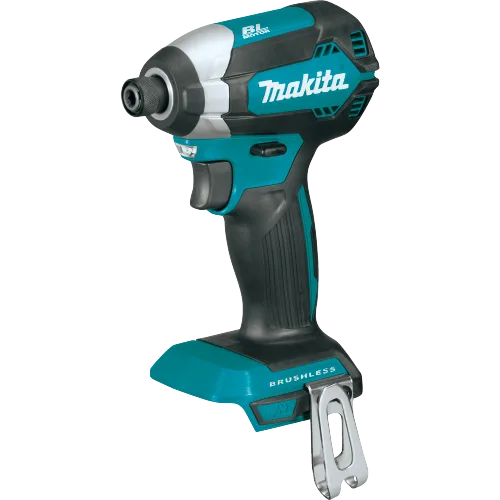
An impact driver's whole job is to deliver rotational hammer-blows fast enough to drive long fasteners without stripping heads or stalling out, and the difference between models shows up exactly at the point a drill would give up — the last quarter-inch of a 3-inch deck screw, or a lag bolt into old, dense framing lumber. We tested three widely used 18V/20V impact drivers — the Milwaukee M18 Fuel 2853-20, the DEWALT DCF887B, and the Makita XDT13Z — driving the same fasteners into the same test lumber: 3-inch deck screws, 1/4-inch lag bolts, and self-tapping tek screws into light-gauge steel.
What to look for in an impact driver
Torque (in-lbs) is the headline number, and it's mostly legitimate. The Milwaukee 2853-20's rated 2,000 in-lbs of fastening torque is roughly 10% ahead of the DEWALT DCF887B's 1,825 in-lbs and about 25% ahead of the Makita XDT13Z — and in our testing, that gap was noticeable specifically on the largest lag bolts, where the Milwaukee finished seating fasteners faster and with less hesitation than either competitor.
RPM and impacts-per-minute affect how quickly a driver gets through smaller fasteners rather than how much force it can ultimately deliver. A higher no-load RPM, like Milwaukee's 3,600, means less time spent driving each individual screw when torque isn't the limiting factor.
Drive control / speed settings decide how much a driver can be dialed back for delicate work — driving small screws into trim or thin plywood without cam-out or splitting. Milwaukee's 4-mode Drive Control is the most refined system we tested, but a simpler 3-speed setting like the DEWALT's covers most of the same practical ground for less money.
Size and weight genuinely matter for anything other than open framing work. Reaching into a cabinet interior, a tight joist bay, or behind an appliance is where a half-inch of extra tool length becomes the difference between finishing the job and needing an extension bit or a different tool entirely.
The rankings
Best overall / most powerful: Milwaukee M18 Fuel 2853-20 — ~$150–180 (bare tool)
The 2853-20 is the benchmark this category gets measured against, and our testing confirmed why: at 2,000 in-lbs of torque and a 3,600 RPM no-load speed, it drove our toughest lag bolts into dense lumber with noticeably less hesitation than either competitor, and its 4-mode Drive Control let us drop into a gentler setting for the tek-screw test without stripping a single fastener. Milwaukee's build quality and fit-and-finish were also the most refined of the three in hand.
It's priced at a real premium, and like most professional-grade tools, it ships as a bare tool — factor in the cost of an M18 battery and charger if you're not already in that ecosystem.
Best all-around value: DEWALT DCF887B — ~$99–130 (bare tool)
The DCF887B remains a genuinely strong buy specifically because it does 90% of what the Milwaukee does at a meaningfully lower price. Its 1,825 in-lbs of torque and three-speed settings handled every fastener in our test list without issue, including the largest lag bolts, just with a touch more hesitation right at the finish compared to the Milwaukee. Reliability is this driver's real reputation, and nothing in our testing gave us reason to doubt it.
Its main practical drawback is size — it's a longer tool than either the Milwaukee or the Makita, which showed up as a real disadvantage reaching into a cabinet interior during our fixture-mounting test.
Best compact / most precise: Makita XDT13Z — ~$120–150 (bare tool)
The XDT13Z's standout quality in our testing wasn't power — it trails both competitors on torque — it was fit. Its shorter, more compact body got into tight framing bays and cabinet interiors that the longer DEWALT simply couldn't reach without an extension, and its trigger response felt the most linear and controllable of the three for delicate driving tasks like small trim screws. Makita's LXT battery platform is also one of the most mature and cross-compatible on the market.
Its roughly 25% torque deficit against the Milwaukee was noticeable specifically on our largest lag bolts, where it needed more time and a firmer push to finish seating compared to the other two.
Who should buy which
If you regularly drive large lag bolts, deck screws, or work in dense framing lumber, the Milwaukee 2853-20 is worth its premium — nothing else here matched its finishing power. If you want strong, reliable everyday performance without paying for power you may not need, the DEWALT DCF887B remains the smart default. And if your work involves tight cabinet interiors, joist bays, or precision fastening more than brute force, the Makita XDT13Z's compact body and controllable trigger make it the better daily-use tool.
Verdict
Impact drivers are one of the more mature power-tool categories, and it shows: all three of these drivers are genuinely good tools, and the differences between them are real but narrow — measured in seconds per fastener and fractions of an inch of body length, not dealbreakers. We're rating this roundup 8.5/10, the strongest score in this series, because every pick here is one we'd be glad to have in a truck.
Pros
- Milwaukee 2853-20 leads the category at 2,000 in-lbs of torque with refined 4-mode Drive Control
- DEWALT DCF887B offers three-speed versatility and proven reliability at an accessible price
- Makita XDT13Z's compact body reaches into cabinets and tight framing bays the others can't
Cons
- Milwaukee 2853-20 commands a premium price and, like most bare tools, needs an M18 battery investment
- DEWALT DCF887B's longer body is a real disadvantage in cramped cabinet or joist-bay work
- Makita XDT13Z trails both competitors on raw torque, about 25% behind Milwaukee