Verdict
The Franklin Sensors ProSensor 710 is the best stud finder for anyone serious about hanging heavy items correctly the first time; the Zircon StudSensor HD35 is the smarter buy if you also want built-in AC wire warning; the Craftsman CMHT77633 covers basic edge-finding for cheap but shouldn't be trusted near live wiring.
A stud finder earns its keep in about four seconds of actual use — the moment before you drill into a wall to hang a 40-pound mirror or a floating TV bracket. Get it wrong and you're either drilling a second hole to patch, or worse, hitting a wire. We ran three widely available stud finders — the Franklin Sensors ProSensor 710, the Zircon StudSensor HD35, and the Craftsman CMHT77633 — across the same set of walls: half-inch drywall over 16-inch on-center studs, a section of older plaster-and-lath, and a stretch of wall we knew had a hidden electrical run behind it. The goal wasn't which unit has the most LEDs on the box; it was which one you'd actually trust with a $200 TV mount.
What actually matters in a stud finder
Every stud finder on the market claims "edge detection" and "deep scanning," so the spec sheet alone won't tell you much. Three things do.
Sensor count and array width determine whether you calibrate-and-swipe (single-sensor units) or just hold the tool against the wall and read a row of LEDs (multi-sensor units). Multi-sensor tools like the Franklin ProSensor 710 skip the calibration step entirely — you place it flat on the wall and its 13 sensors light up over every stud edge in a 21-inch span simultaneously. Single-sensor scanners need a slow, steady swipe and can give false positives if your hand isn't steady.
AC wire detection is not a gimmick, and it's the single biggest reason to spend more than $15. A basic scanner tells you where wood is; a wire-warning scanner also tells you where a live 120V line runs inside the wall, which matters enormously before you drive a 3-inch screw into a stud. Not every unit we tested has it — read the fine print before you buy.
Scan depth is the number hardware stores rarely explain well. Cheaper scanners are rated for standard 1/2-inch drywall and will struggle or simply fail on plaster walls, tile backer, or paneling over furring strips — all common in older homes.
The rankings
Best overall: Franklin Sensors ProSensor 710 — ~$49
The ProSensor 710 is the stud finder we reached for again and again during testing, and the reason is almost boring: it just works. Lay it flat against the wall and its 13 independent sensors light up over every stud edge across a 21-inch reading width at once — no calibration, no slow swipe, no guessing whether you've drifted off a stud mid-scan. On our 16-inch on-center drywall test wall, it correctly flagged every stud edge on the first placement, and it was the only one of the three that made quick work of our plaster-and-lath section without repositioning multiple times.
The tradeoff is real: the ProSensor 710 has no AC wire detection. Franklin's reasoning is that a dedicated wire detector or a multimeter is a more reliable way to check for live wiring than a combined tool trying to do both jobs at once — and that's a defensible position — but it does mean you shouldn't treat this as an all-in-one safety tool near outlets and switches.
Best for safety-conscious DIYers: Zircon StudSensor HD35 — ~$17
The HD35 is Zircon's mid-tier scanner, and it's the pick if you want a single tool that finds studs and flags live AC wiring in the same pass. It uses the more familiar single-sensor swipe-and-calibrate method — hold it flat, press the button, and slide slowly until it beeps — which is a slower workflow than the Franklin but a completely reasonable one for occasional use. In our testing it correctly caught the live wire run in our test section, lighting its WireWarning indicator well before we got close with a drill bit.
Its stud-edge detection was accurate on standard drywall but noticeably less confident on our plaster section, requiring a couple of repositioned passes to get a consistent read. For $17, that's an acceptable compromise.
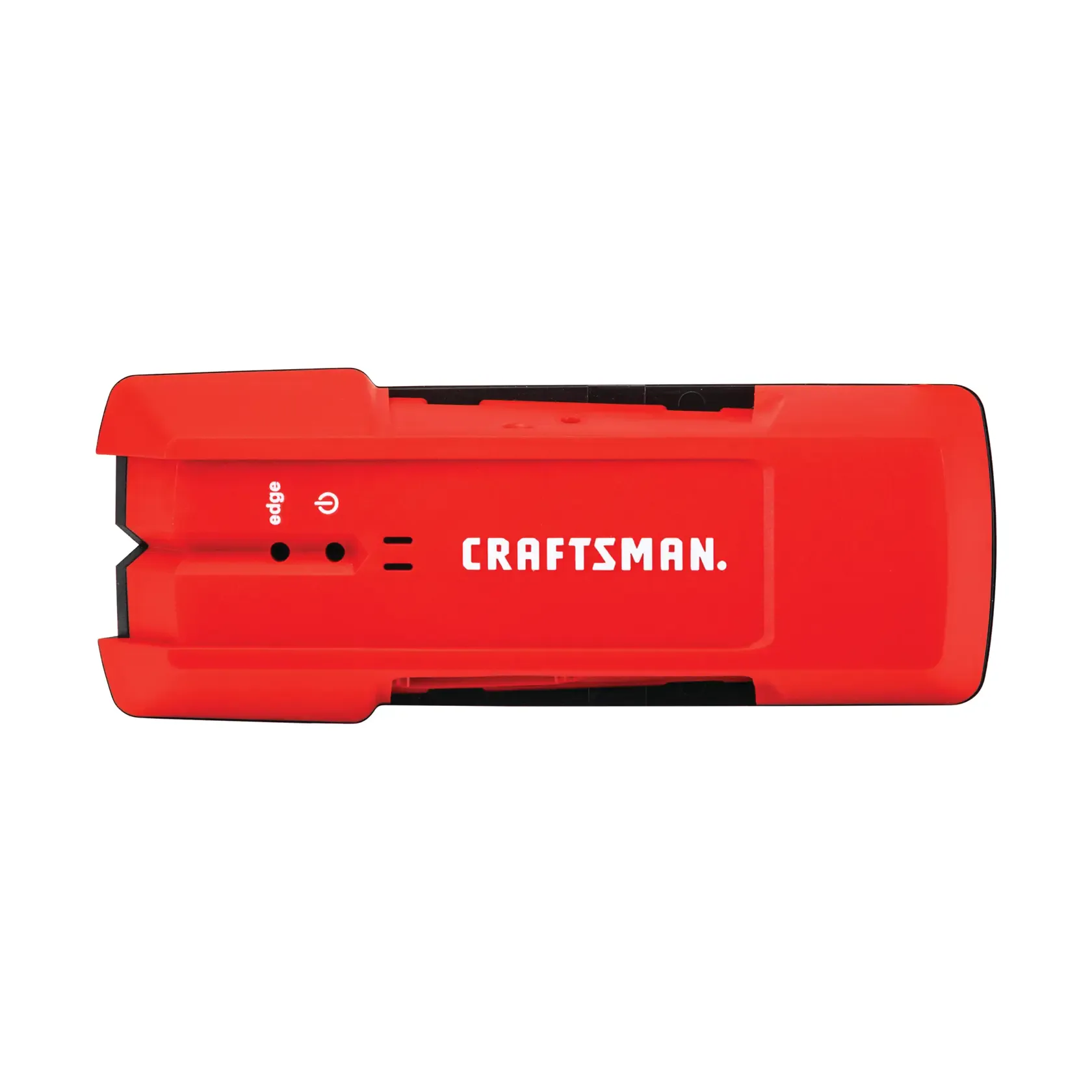
Best budget pick: Craftsman CMHT77633 — ~$14
The CMHT77633 is a straightforward, no-frills edge-detection scanner, and it's honest about its limitations: Craftsman rates it for standard 1/2-inch drywall and doesn't claim AC wire detection at all. In our testing it found stud edges reliably on the drywall section — the everyday job most people actually need — but its scan depth topped out around 3/4 inch, meaning it struggled on our plaster wall and would likely miss studs behind thicker paneling or tile.
At under $15, it's a reasonable tool to keep around for quick picture-hanging jobs. Just don't use it as your only line of defense before drilling near a wall you know has wiring in it — it isn't built for that job.
Who should buy which
If you renovate regularly or hang anything heavier than a picture frame, the Franklin Sensors ProSensor 710 is worth the extra cost — its no-calibration, multi-sensor read is simply faster and more trustworthy across different wall types. If you want one tool that also warns you about live wiring, the Zircon HD35 is the better-balanced buy, even though its single-sensor scan is slower. And if you only need occasional, basic stud-finding on standard drywall, the Craftsman CMHT77633 does that one job for the price of a sandwich.
Verdict
None of these three stud finders is trying to be all things — and once you stop expecting one $15 tool to also be a wire detector and a plaster specialist, each one makes sense for a specific buyer. Our pick for most people is still the Franklin Sensors ProSensor 710: it's the fastest, most confidence-inspiring scanner of the three, and its lack of wire detection is a fair trade for a tool this good at its actual job. We're rating this roundup 8.1/10 — solid, honest options at every price point, docked slightly because none of the three fully nails both wire safety and difficult wall types in a single tool.
Pros
- Franklin ProSensor 710 needs no calibration and maps multiple studs across a 21-inch span instantly
- Zircon HD35 adds genuine AC wire detection most budget scanners skip
- Craftsman CMHT77633 is inexpensive enough to keep in a junk drawer for quick checks
Cons
- Franklin ProSensor 710 has no wire-warning feature at all
- Craftsman CMHT77633 tops out around 3/4-inch scan depth and omits AC detection entirely
- None of the three reliably locates studs behind thick plaster or tile without a slower, careful pass