Drywall damage ranges from "ignore it" to "call someone today," and the price tag follows that same curve — from a $5 tube of spackle to an $800 wall replacement. The actual deciding factor isn't how the damage looks, it's how big it is relative to the whole wall, and whether it's dry. Here's the real pricing so you know which category you're in before you call anyone.
Cost by Damage Type and Size
- Small holes (nail holes, doorknob dents, screw holes): $75–$200 professionally, often $50-$150 for simple patch jobs
- Medium holes (fist-sized, small impact damage): $150–$400
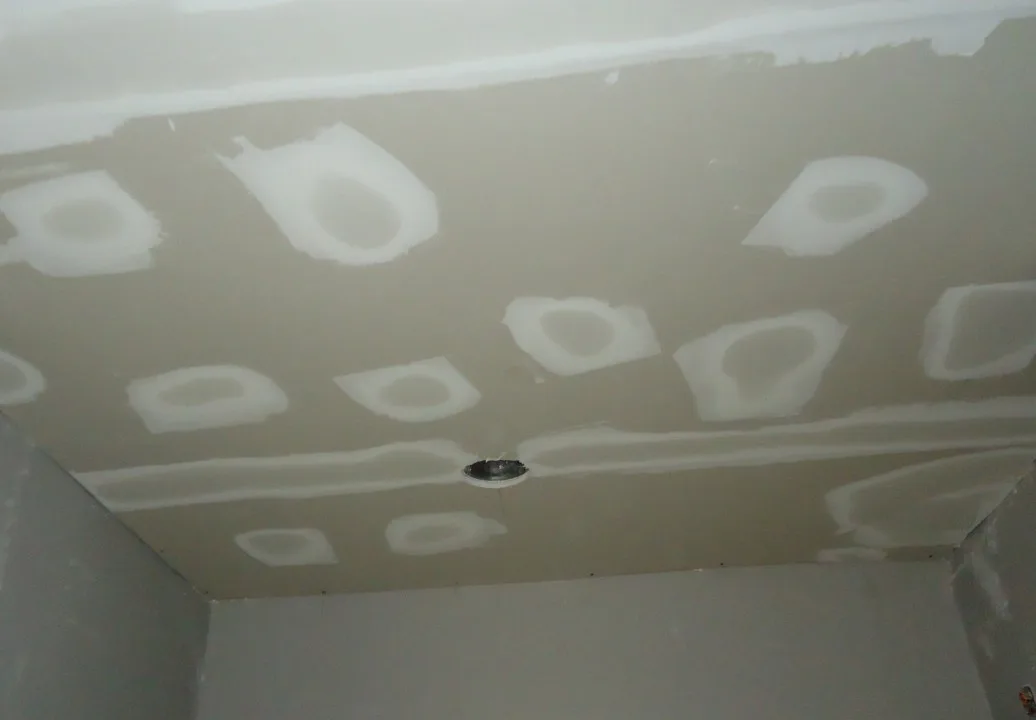
- Large holes or multiple patches (basketball-sized, electrical box relocations): $300–$600
- Water damage repair (requires cutting out and replacing affected section): $300–$800
- National average across all drywall repair jobs: around $609, with most falling $295–$925
Patch Pricing Per Job (Not Per Square Foot)
Unlike most trades in this guide, drywall patching is usually quoted per job rather than per square foot, because setup and texture-matching time dominates the cost regardless of patch size. Most patch jobs run $50–$400 total.
Full Wall Replacement Costs
- Standard 8'x12' wall, fully replaced: $200–$600 in material and basic labor
- Full wall replacement including finishing (tape, mud, texture, paint prep): $380–$720 per standard wall
When to Patch vs. Replace: The Break-Even Math
Repair is almost always cheaper for isolated damage — a hole here, a crack there. But the math flips once damage is widespread: once patch costs exceed roughly 40-50% of what a full wall replacement would cost, replacement becomes the better value, because you're not paying for repeated setup, mudding, sanding, and texture-matching trips across multiple small areas. As a practical rule of thumb, the break-even point typically hits around 4-5 separate repair areas on a single wall — at that point, just replace the sheet.
Water damage is the one category where this calculation changes regardless of size: if drywall has absorbed water, it needs to come out, full stop, because mold risk and structural softening don't resolve with a surface patch.
What Drives the Price Up
- Textured walls and ceilings. Orange peel, knockdown, and skip-trowel finishes require a skilled hand to replicate — texture matching is consistently the hardest and most expensive part of a "simple" drywall repair, and a bad match is visible in the right lighting forever.
- Water damage requiring mold remediation. If moisture sat long enough to grow mold, that's a specialized (and separately licensed, in some states) remediation job before drywall work even starts — easily adding $500-$1,500.
- Repairs near electrical boxes or in finished ceilings. Ceiling work requires scaffolding or careful ladder work and is inherently slower and messier than wall patches (everything falls on you, not the floor).
- Multiple scattered small holes rather than one concentrated area — each one requires its own setup, dry time between coats, and sanding, so five small holes often cost more combined than one larger contiguous patch.
- Paint matching after repair. If the wall's existing paint has faded or isn't a common color, repainting the entire wall (not just the patch) is often necessary to avoid a visible "patch halo" — add $100-$300.
What Keeps the Price Down
- Flat, untextured walls — the easiest and fastest surface to patch invisibly.
- Consolidating multiple small holes into one visit rather than calling separately each time damage happens.
- Doing simple nail-hole and screw-hole patching yourself — a tube of spackle and a putty knife handles this category completely.
- Catching water damage early, before it spreads beyond the original leak point.
DIY vs. Hiring a Pro
Small holes and dents are genuinely a DIY-appropriate repair — spackle, a putty knife, light sanding, and touch-up paint is a 20-minute job that costs under $15 in materials. We'd draw the DIY line at anything larger than a fist-sized hole, anything involving texture matching, and absolutely anything involving water or suspected mold — those require judgment calls about what's salvageable that take experience to make correctly. Full wall replacement is borderline: a handy homeowner can hang and tape a single sheet of drywall, but getting a seamless, invisible finish on the mudding and sanding takes practice most people don't have, and a visibly uneven wall is hard to un-see once you've noticed it.
The Bottom Line
Budget $50-$150 for small cosmetic holes you can realistically DIY, and $300-$600 for a professional to handle anything larger, textured, or water-related. If you're looking at more than 4-5 repair spots on one wall, stop patching piecemeal and get a quote for full replacement instead — it'll likely cost about the same as the fifth patch job while leaving you with a genuinely clean, even wall instead of a quilt of touch-ups.
Sources: Fieldcamp — Drywall Repair Cost 2026, Drywall Installation Cost — Drywall Repair Cost in 2026