Deck quotes confuse people because "wood is cheaper" is true for materials and often false for the total 20-year cost. We've watched homeowners choose pressure-treated wood to save money upfront, then spend more over a decade on staining, sealing, and board replacement than they would have paid for composite in the first place. Here's the honest math on both.
Material Cost Per Square Foot
- Pressure-treated wood: $2–$5/sq ft material only
- Cedar or redwood: $7–$12/sq ft material only
- Composite decking: $5–$22/sq ft material only, depending on brand and board profile (entry-level wood-plastic composite at the low end, premium PVC capped boards at the high end)
Total Installed Cost Per Square Foot
- Pressure-treated wood deck, installed: $25–$45/sq ft
- Cedar/redwood deck, installed: $35–$60/sq ft
- Composite deck, installed: $35–$70/sq ft
Average Total Project Cost
- Wood deck addition, national average: around $18,000-$20,000 (typical mid-size deck)
- Composite deck addition, national average: around $25,000, roughly a 27% premium over wood at installation
For a common 300-400 sq ft deck, that translates to roughly $10,000-$18,000 for pressure-treated wood and $15,000-$28,000 for composite, depending on railing, stairs, and site complexity.
What's Actually in the Bill
- Framing and footings: 25-35% — this structural layer costs the same regardless of which decking material sits on top, which is why the material choice affects total cost less than people expect
- Decking boards: 20-35% depending on material tier
- Railings: 10-20% — composite or metal cable railing systems cost significantly more than basic wood balusters
- Labor: typically 40-50% of the total bid
- Permits: $100-$500, required in most municipalities for any deck attached to the house or above a certain height
The 20-Year Cost Comparison (Why Composite Often Wins Long-Term)
This is the number that actually matters for a deck you plan to keep: wood decking needs re-staining or sealing every 2-3 years (materials and labor run $300-$800 per application for a mid-size deck) and individual board replacement as it warps, splits, or rots — realistically every 10-15 years for the full deck surface. Composite needs essentially no staining, sealing, or board replacement over the same period and typically carries a 25-50 year warranty.
Run the simple math: wood's lower upfront cost ($18,000 vs. $25,000, roughly a $7,000 gap) gets eaten by $3,000-$6,000+ in maintenance and partial board replacement over 15-20 years. For homeowners planning to stay long-term, composite usually closes most or all of that cost gap while delivering a deck that looks new for decades instead of years.
What Drives the Price Up
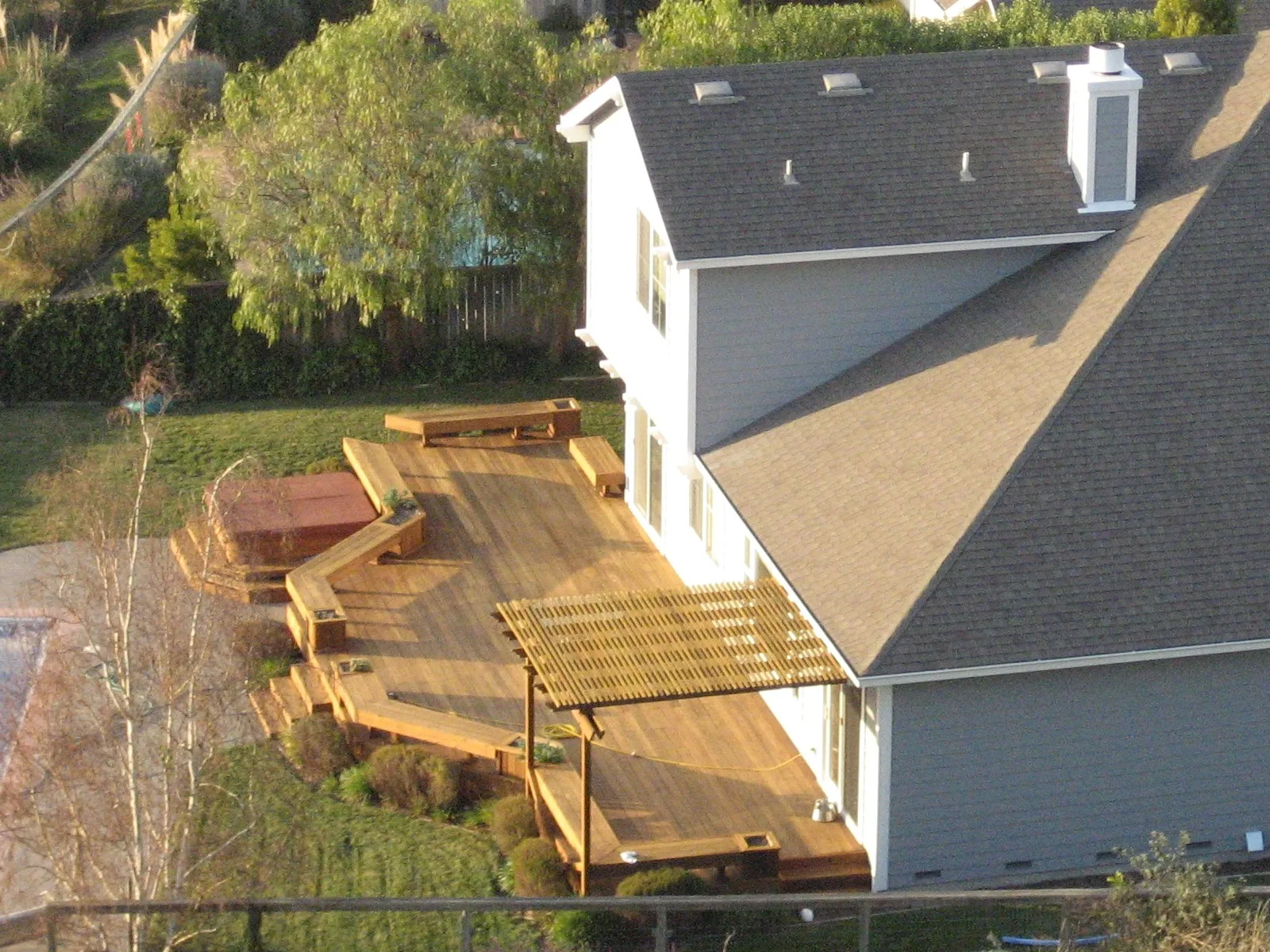
- Elevated decks requiring tall footings/posts. A deck more than a few feet off the ground needs deeper footings, stairs, and often additional railing height requirements — all add labor and material.
- Complex shapes (multi-level decks, wraparound designs, built-in seating or pergolas).
- Difficult site access — a backyard that a truck or material lift can't easily reach means more manual carrying, which slows the job.
- Premium composite lines (capped PVC, hidden fastener systems) — these look the best and last the longest but sit at the top of the composite price range.
- Local permit and inspection requirements, especially for decks attached to the house (requiring ledger board inspection) versus free-standing structures.
What Keeps the Price Down
- Simple rectangular, single-level design with standard railing.
- Pressure-treated wood if you're comfortable with the ongoing maintenance commitment, or don't plan to stay in the home long-term.
- Ground-level or low-elevation decks that minimize footing depth and skip complex stair/railing code requirements.
- Entry-tier composite rather than premium capped boards — still delivers the low-maintenance benefit at a smaller premium over wood.
DIY vs. Hiring a Pro
A simple, ground-level, rectangular deck is within reach for an experienced DIYer comfortable with framing and a circular saw — this is where real savings exist, potentially cutting the labor half of the bill (40-50% of total cost) substantially. We'd draw the line at anything elevated more than a couple feet, anything attached to the house (ledger board attachment done wrong is a structural failure risk and is also where most deck collapse incidents originate), and anything requiring footings below the frost line in cold climates, which requires permit-level engineering knowledge to get right. Composite installation specifically also has manufacturer-specific fastening systems that affect warranty validity if installed incorrectly.
The Bottom Line
Budget $10,000-$18,000 for a straightforward pressure-treated wood deck, or $15,000-$28,000 for composite with the benefit of near-zero maintenance for decades. If you're planning to stay in the house more than 10 years, run the maintenance math before defaulting to the cheaper wood option — composite's higher upfront cost often evens out or wins once staining and board replacement are factored in.
Sources: LawnLove — How Much Does It Cost to Build a Deck 2026, HomeGuide — Composite Decking vs. Wood Cost 2026