Most garbage disposal problems aren't mechanical failures — they're maintenance you skipped. Maintaining a garbage disposal is a small, recurring habit, not a repair job, and the two rules that prevent almost every service call are simple: run it often, and always run it with cold water.
The weekly habits that keep it running
- Run it regularly. Even light daily use is better for a disposal than letting it sit idle for a week — infrequent use lets rust and corrosion get a foothold on the components, and food residue dries onto the grind chamber.
- Always use cold water, both during and for about 15 to 20 seconds after grinding. Cold water hardens grease and fat particles so the blades can actually break them apart, instead of letting them melt into a slick coating on the chamber walls. Hot water does the opposite — it liquefies fat, which then re-solidifies further down your pipes.
- Keep a drain strainer in place whenever the disposal isn't actively grinding, so utensils, bottle caps, and other non-food items never get a chance to fall in.
- Cut large items into smaller pieces before feeding them in, and feed food in gradually rather than dumping in a full plate scraping at once.
What never goes down the disposal
- Fibrous vegetables (celery, corn husks, artichoke leaves) — the fibers wrap around the blades
- Coffee grounds and eggshells in quantity — they accumulate into a sludgy paste rather than grinding away
- Grease, oil, or fat in any form — it coats the chamber and the pipes downstream
- Pasta, rice, or starchy foods that expand — they can swell and cause jams
- Bones, pits, and anything hard enough to blunt the blades
- Non-food items of any kind — nothing should go down a disposal that didn't come from a plate
A simple maintenance routine
- Weekly: Run cold water down the drain for a few seconds even on days you're not disposing of food, to keep the trap flushed.
- Every one to two weeks: Clean and sharpen the blades by dropping a handful of ice cubes into the disposal and running it with cold water. The ice knocks loose buildup on the impellers without damaging them.
- Every two to four weeks: Deal with odor at the source — grind a few citrus peels (lemon, lime, or orange) with cold water running to freshen the chamber naturally.
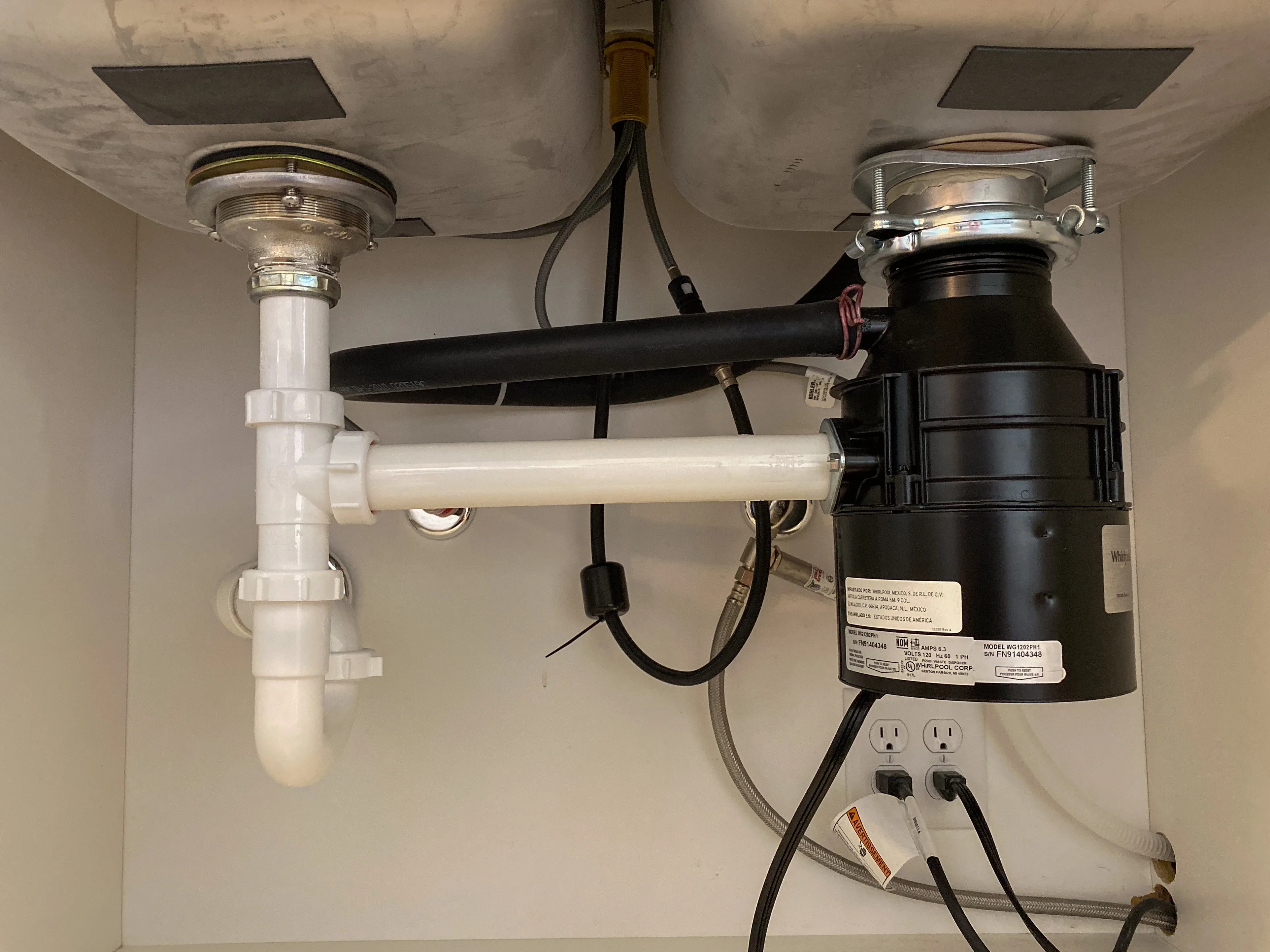
- Monthly: Check under the sink for any signs of leaking at the mounting flange or discharge pipe connections, since a slow drip here is often the first sign a seal is wearing out.
- As needed: If the disposal hums but doesn't spin, it's likely jammed — never reach in by hand. Turn off power at the breaker, use the reset button on the unit's underside, and clear the jam with an Allen wrench in the bottom-center hex socket if your model has one.
The takeaway
A garbage disposal's biggest enemies are grease, fibrous scraps, and neglect — not the food it was built for. Run it often, keep the water cold, skip the ice-and-citrus routine every couple of weeks, and never treat it as a trash chute for anything that isn't soft food waste. That's the entire maintenance plan, and it's the difference between a disposal that lasts a decade and one that jams within the year.