A dryer vent clogged with lint doesn't just slow down your laundry — it's one of the more common causes of house fires that homeowners underestimate. Cleaning a dryer vent once a year is the baseline every appliance and fire-safety source agrees on, but the real number depends on how hard your dryer works and what's traveling through that duct.
How often should you actually clean it?
Once a year is the minimum for a typical household. Move to twice a year — spring and fall — if any of the following apply to you:
- You do laundry for a large family or run the dryer almost daily
- You have pets, since pet hair clogs vent screens and ducting faster than regular lint
- You regularly dry heavy loads like towels, bedding, or blankets
- Your dryer vent run is long, has multiple bends, or vents through the roof instead of a short wall run
Spring and fall are also the practical windows to do it: mild weather makes it easier to get to the exterior vent cap, and doing it before the coldest months matters because dryer fires spike in winter, when vents are used more and checked less.
Warning signs you shouldn't wait for the calendar
Don't wait for your scheduled date if you notice any of these — clean the vent immediately:
- Clothes take noticeably longer to dry, or need a second cycle to finish
- The outside of the dryer feels hot to the touch during a cycle
- The laundry room smells warm or slightly burnt while running
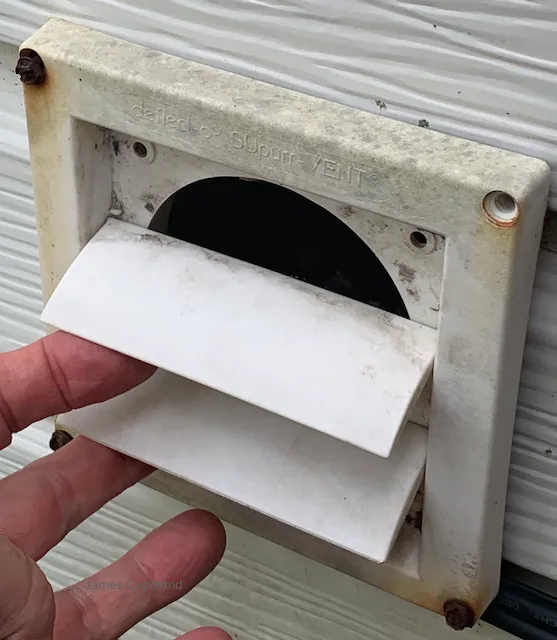
- The exterior vent flap doesn't open easily, or barely moves when the dryer runs
- You can't remember the last time it was done — if it's been over a year, that's your answer
How to clean a dryer vent yourself
- Unplug the dryer (or shut off the gas supply valve if it's a gas dryer) and pull it away from the wall.
- Disconnect the vent hose from the back of the dryer and from the wall duct connector.
- Clean the lint trap housing inside the dryer with a vacuum brush attachment — lint builds up here even if you clean the screen every load.
- Vacuum out the flexible hose or, better, replace it if it's the accordion-style foil type — rigid metal duct is safer and clogs less.
- Run a dryer vent brush kit (a long flexible rod with a brush head, sold at hardware stores) through the wall duct from the inside, then again from the exterior vent cap, until the brush comes back clean.
- Vacuum the exterior vent hood and confirm the flap opens and closes freely.
- Reconnect everything, seal the duct connections with foil tape (not standard duct tape, which degrades with heat), and plug the dryer back in.
- Run a test cycle with nothing in the dryer and confirm air is exiting strongly at the exterior vent.
If the duct run is long, has several 90-degree turns, or goes up through a roof, a brush kit may not reach the whole way — that's a case for a professional dryer vent cleaning service, which uses a rotary brush and shop vac combination built for long runs.
The takeaway
A dryer vent is easy to forget because the dryer still runs even when the vent is half-clogged — it just runs less efficiently and less safely. Put it on the same seasonal calendar as your HVAC filter or gutters: clean it in spring and fall if you have any risk factors above, once a year at minimum otherwise, and never ignore hot-to-the-touch or slow-drying warning signs in between.