If dishes are coming out of the dishwasher with a filmy residue or bits of food still stuck on, the machine usually isn't broken — it's dirty. A dishwasher cleans everything else in your kitchen but doesn't clean itself, and a few minutes of maintenance a month is what keeps it actually doing its job instead of just recirculating the same grimy water.
The filter is the part almost everyone skips
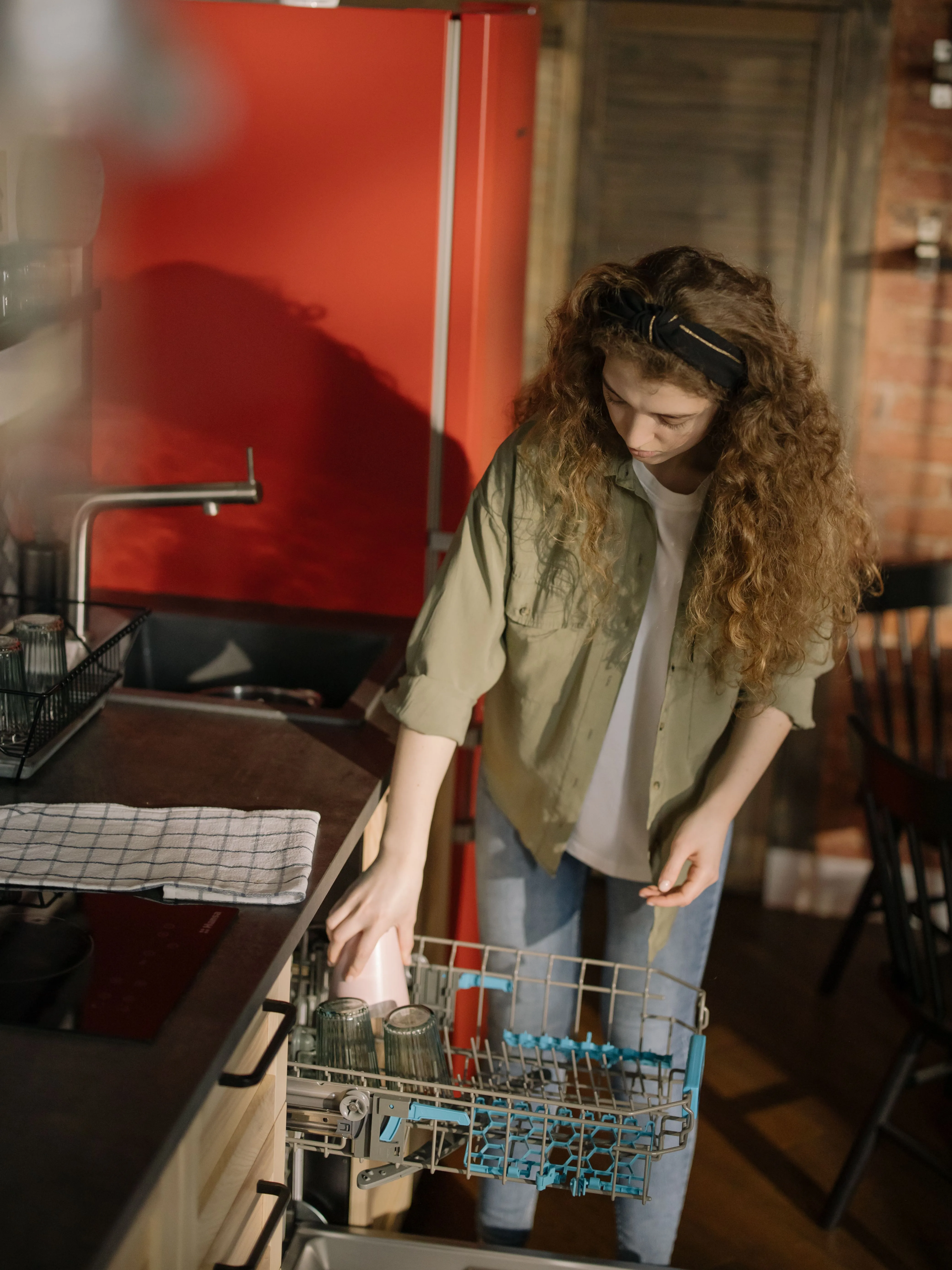
Most dishwashers made in the last decade or so have a removable filter at the bottom of the tub, usually a cylindrical piece that twists out. This is the single most important part to check regularly:
- Remove the bottom rack to access it.
- Twist the filter counterclockwise and lift it out.
- Rinse it under hot tap water, using an old toothbrush to work food debris out of the mesh.
- Check the coarse filter sitting beneath it for any trapped debris, glass shards, or food chunks.
- Twist it back into place, making sure it's fully seated — a loose filter can rattle or let debris back into the wash.
Check it every one to two weeks if you run the dishwasher daily, and at least once a month otherwise. A clogged filter means dirty water keeps circulating over your dishes instead of draining away, which shows up as cloudiness, grit, or a lingering odor.
A full monthly clean
- Wipe the door gasket and seal with a damp cloth — this is where grime, mildew, and mold like to build up, especially at the bottom fold of the rubber seal.
- Clean the spray arms. Remove them if your model allows it and check the small holes for clogs; a toothpick or a straightened paperclip clears blocked jets. Clogged spray arm holes are a common, overlooked cause of dishes coming out only partially clean.
- Run an empty hot cycle with a dishwasher cleaner (a citric-acid-based product, or a cup of plain white vinegar placed in a bowl on the top rack) to dissolve grease film and mineral buildup on the interior walls and heating element.
- Wipe down the exterior control panel and door to prevent grime buildup around buttons and seals.
Habits that prevent buildup in the first place
- Scrape large food scraps off plates before loading, but don't over-rinse — a small amount of food residue actually helps some dishwasher detergents' enzymes activate correctly.
- Use the recommended amount of detergent for your water hardness; too little leaves residue, too much can leave a cloudy film.
- Run hot water at the kitchen sink faucet for a few seconds before starting a cycle, so the dishwasher's first fill is already hot rather than warming up mid-cycle.
- Leave the door cracked open after a cycle finishes to let the interior air out and dry fully — a sealed damp interior is what breeds musty odors and mold on the gasket.
The takeaway
A dishwasher's biggest maintenance need is the filter, not the exterior — check and rinse it every couple of weeks, wipe the door seal and spray arms monthly, and run an empty cleaning cycle once a month to keep grease and mineral film from building up on the tub walls. Skip this and the machine doesn't fail outright — it just quietly gets worse at the one thing it's supposed to do.