If your toilet is hissing, gurgling, or refilling itself every few minutes even when nobody's touched it, you're looking at a water bill problem, not just an annoyance. A running toilet can waste anywhere from 200 to 2,000 gallons a day depending on how bad the leak is. The good news: this is one of the most beginner-friendly plumbing repairs there is. No soldering, no shutting off water to the whole house, and the parts run $8–$25 at any hardware store.
I've replaced hundreds of these in rentals and my own century-old house. Nine times out of ten, it's one of three parts: the flapper, the fill valve, or the float. Here's how to find out which one and fix it.
Diagnose It in Two Minutes
Before you buy parts, figure out what's actually failing. Take the tank lid off and watch the water while you flush.
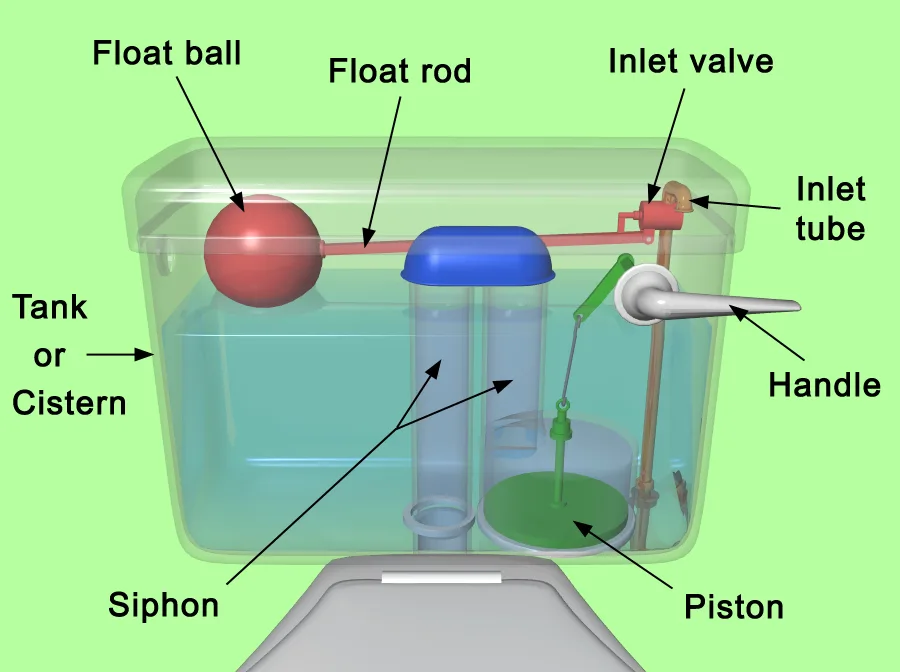
- Water trickling into the overflow tube constantly (that vertical pipe in the middle of the tank) — the flapper isn't sealing, or the fill valve is overfilling.
- Fill valve won't shut off after the tank refills — bad fill valve or a float set too high.
- Silent leak — put a few drops of food coloring in the tank, wait 15 minutes without flushing, and check the bowl. Color in the bowl means the flapper is leaking, even if you can't hear anything.
Also check the chain connecting the flapper to the flush handle. If it's tangled, too tight, or has too much slack, that alone can cause a running toilet — and it costs nothing to fix.
Tools and Parts
- Adjustable wrench or channel-lock pliers
- Sponge or old towel
- Replacement flapper (universal, or bring the old one to match)
- Replacement fill valve (universal, adjustable height)
- Small bucket
Turn off the water supply at the shutoff valve behind the toilet (turn clockwise) before you open anything up. Flush to drain most of the tank, then sponge out what's left.
Fix 1: Replace the Flapper
The flapper is the rubber disc at the bottom of the tank that seals the flush valve opening. Over time it warps, cracks, or builds up mineral deposits and stops sealing flush.
- Unclip the old flapper from the two pegs on either side of the overflow tube, and disconnect the chain from the flush lever.
- Note the flapper's model number or bring it to the store — flappers aren't all identical, and a mismatched one will leak just as badly as the one you're replacing.
- Snap the new flapper onto the pegs and hook the chain to the flush lever, leaving about half an inch of slack — enough that the flapper closes fully but the chain isn't taut enough to hold it open a crack.
- Turn the water back on, let the tank fill, and flush twice to test.
This fixes the vast majority of running toilets, and it's the cheapest repair on this list.
Fix 2: Replace the Fill Valve
If the fill valve keeps hissing after the tank should be full, or it won't shut off at all, the valve itself is worn out — this isn't something you can usually just clean.
- With the water off and tank drained, disconnect the supply line from underneath the tank (have the bucket ready — it'll drip).
- Unscrew the large plastic locknut holding the old fill valve to the tank bottom and lift it out.
- Set the new fill valve to match your tank's height (most are adjustable — the top of the overflow tube is your reference point) and drop it in from inside the tank.
- Hand-tighten the locknut from underneath, then snug it with pliers — don't overtighten plastic fittings, you'll crack them.
- Reconnect the supply line, turn the water back on, and adjust the water level using the fill valve's adjustment screw or clip so it sits about 1 inch below the top of the overflow tube.
Fix 3: Adjust the Float
If the tank overfills and water spills into the overflow tube, the float is set too high. On a ball-float system, gently bend the float arm down. On a cup-float (the kind that rides up and down the fill valve shaft), pinch the clip and slide it down. Test and readjust until the water line sits below the overflow tube by about an inch.
When to Call a Plumber
Call in a pro if the shutoff valve behind the toilet won't turn or is corroded stuck, if the tank itself is cracked, or if you've replaced both the flapper and fill valve and it's still running — that usually points to a flush valve seat that's corroded or out of round, which means replacing the whole tank or the flush valve assembly, a bigger job than a quick swap.
For nearly everyone else, this is a 30-minute fix with a $15 parts bill instead of a $150 service call — and it stops the meter from spinning while you sleep.