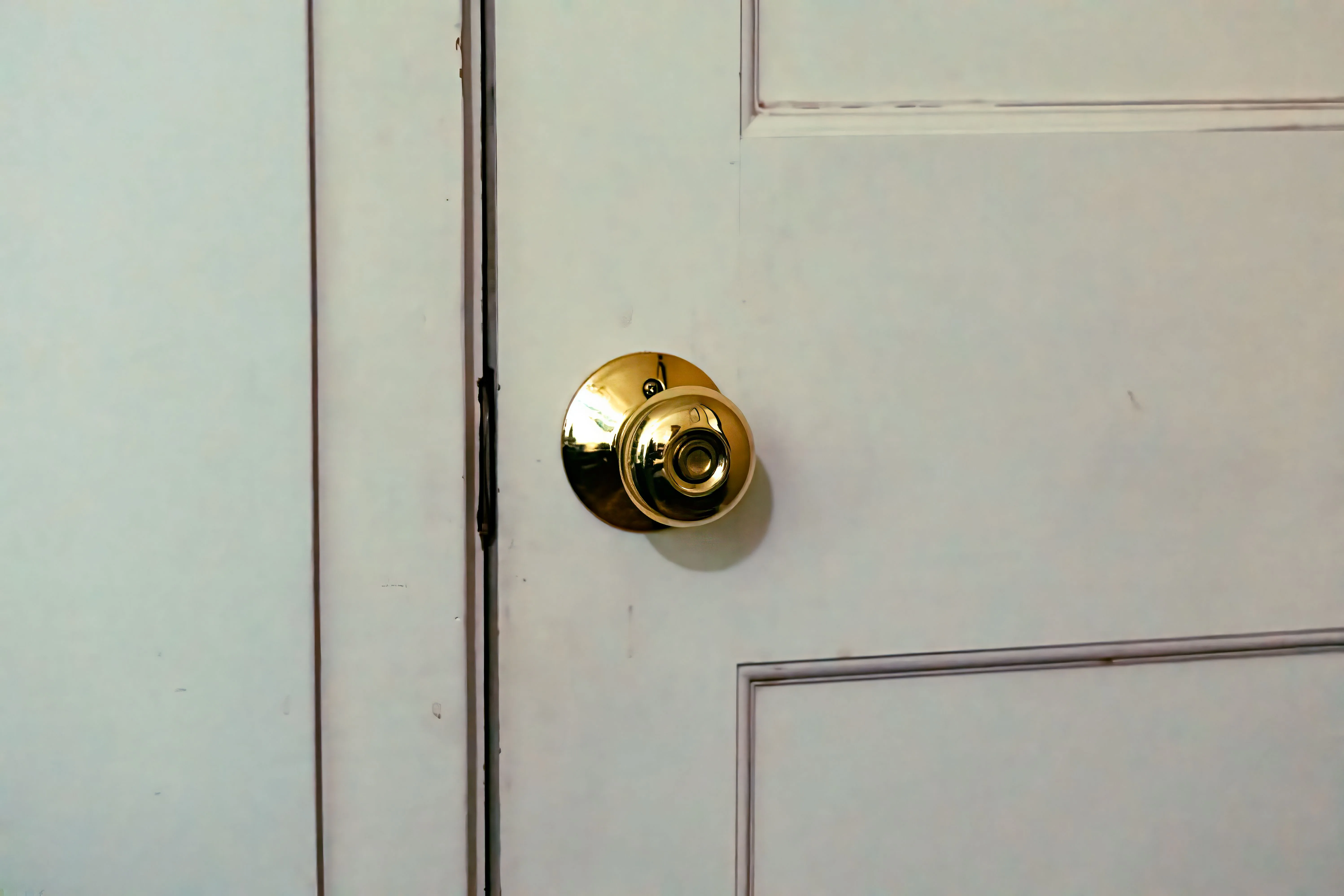
A door that won't latch — swings shut but bounces back open, or needs a hip-check to click closed — is almost never a broken latch mechanism. It's misalignment: the latch bolt and the strike plate hole on the door jamb have drifted out of line, usually from a house settling or hinge screws loosening over months of use. Fixing a door that won't latch is a fix you can diagnose and finish in under 30 minutes, no new hardware required in most cases.
Find Out Exactly Where It's Off
Before adjusting anything, locate precisely where the latch is catching. Rub a bit of lipstick, chalk, or a dry-erase marker on the end of the latch bolt, then close the door normally so the bolt presses against the strike plate without fully latching. Open the door and look at the mark it left on the plate — that tells you exactly which direction the latch needs to move, instead of you filing or adjusting blind.
Step 1: Tighten Everything First
Loose hardware is the single most common cause and the easiest to rule out. Check every screw on both door hinges and on the strike plate itself — over time, screws back out slightly from repeated door slams, letting the whole door sag just enough to throw off the latch alignment. Snug every screw with the correct screwdriver before touching anything else; sometimes this alone fixes it.
If a hinge screw spins without tightening (a stripped hole), remove it, pack the hole with a golf tee or wood matchsticks and wood glue, let it set for 30 minutes, then re-drive the screw into fresh wood.
Step 2: Use Hinge Screws to Nudge the Door
If tightening didn't fully solve it, you can shift the door's position slightly using the hinges themselves — no strike plate work needed:
- If the lipstick mark shows the latch hitting too high on the plate, tighten the screws on the bottom hinge slightly more, which pulls that side of the door down a touch.
- If the mark is too low, snug the screws on the top hinge instead, raising that side of the door.
This works because tightening a hinge pulls the door leaf marginally closer to the jamb at that point, angling the whole door just enough to correct small misalignments.
Step 3: File the Strike Plate for Minor Gaps
If the latch is off by an eighth of an inch or less, the fastest fix is enlarging the strike plate's opening rather than moving the whole plate. Unscrew the strike plate, clamp it or hold it steady, and use a round or triangular metal file to remove material from the side of the hole where your lipstick mark showed contact. File a little, test-fit, and repeat — it's easy to remove more metal, impossible to put it back. Once the latch drops freely into the opening, reinstall the plate.
Step 4: Reposition the Strike Plate for Bigger Gaps
If the mark is more than about an eighth of an inch off, filing won't be enough — you need to actually move the plate. Remove it, and if you're moving it up or down, extend the existing mortise (the recessed cutout in the jamb) with a sharp chisel in the direction you need, then re-drill new screw holes offset from the old ones so the screws bite fresh wood. Fill the old screw holes and the exposed edge of the enlarged mortise with wood filler so it isn't visible once painted.
For a door that's latching too far forward or back (not just up or down), you may need to deepen the mortise itself so the plate sits flush, or add a thin cardboard or plastic shim behind it to bring it forward.
When the Problem Is the Door, Not the Hardware
If hinge and strike adjustments don't resolve it, or the gap between door and frame looks visibly uneven top to bottom, the door itself may have swelled from humidity or the frame may have shifted with the house settling. A door that's binding against the frame on one edge while gapping on the latch side usually needs to be taken down and planed slightly on the binding edge — a bigger job, but still doable without replacing the door.
Most sticking latches, though, are a hinge-screw and lipstick-test fix — cheap, fast, and it saves you from replacing a perfectly good door and lockset over a problem that's really about a sixteenth of an inch of misalignment.